Does Viziquo check technical AI crawler access?
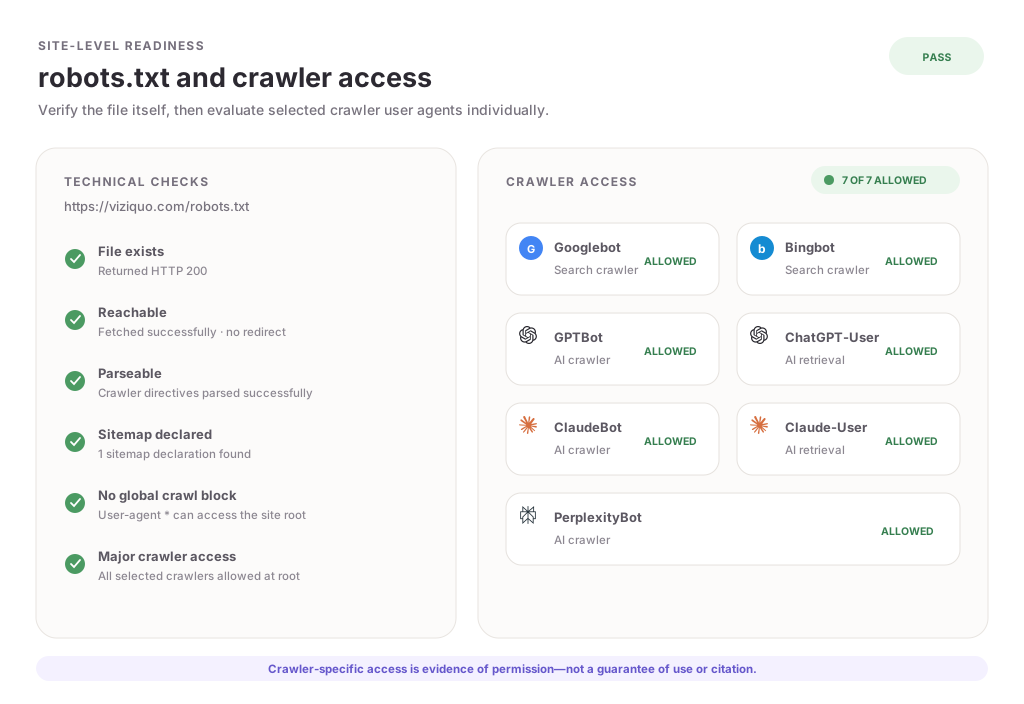
Yes. The current crawler-access view checks GPTBot, ChatGPT-User, ClaudeBot, Claude-User, and PerplexityBot, alongside Googlebot and Bingbot. Results are reported individually because robots directives can differ by user agent.
What is the difference between an AI crawler and a retrieval agent?
Viziquo keeps the categories visible because they represent different access paths. AI crawlers can collect public web content for model-related systems, while retrieval agents can request webpages when an assistant responds to a user. Permission for one user agent does not establish permission for another.
Does a crawler-access pass guarantee that my content will be used?
No. It means the tested robots directives did not block that user agent at the evaluated location. Discovery, retrieval, citation, and recommendation also depend on relevance, authority, source availability, provider behavior, and buyer context.
Does a valid sitemap guarantee indexing or AI visibility?
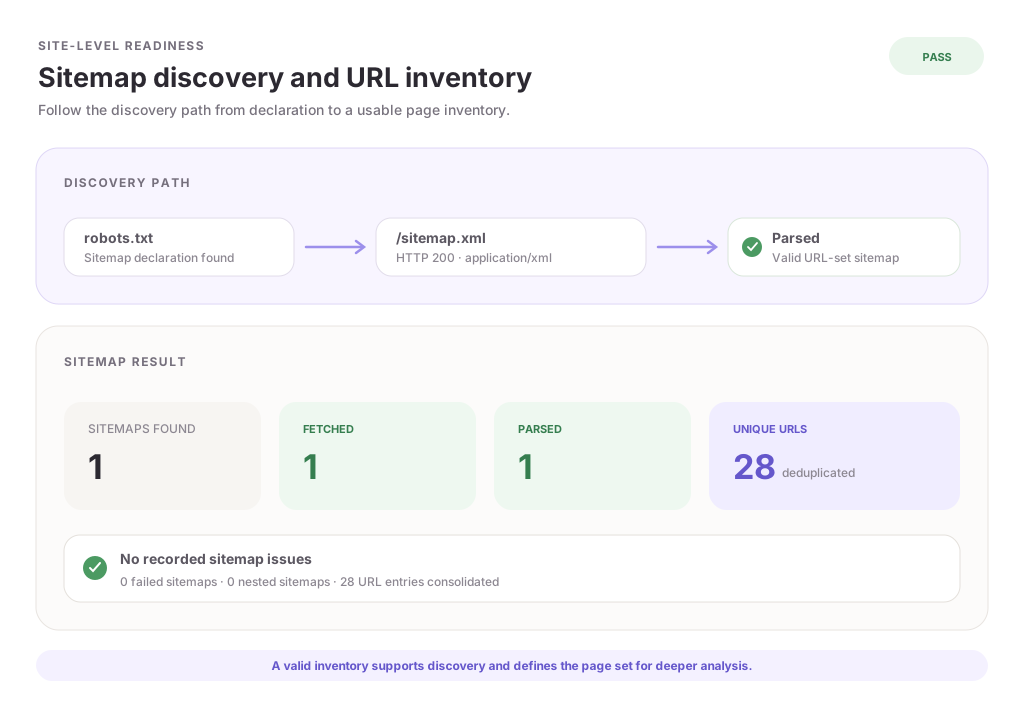
No. A valid sitemap supplies a structured discovery path. It does not require a search engine or AI system to index, retrieve, cite, or recommend every listed URL.
Does a missing llms.txt file block AI assistants?
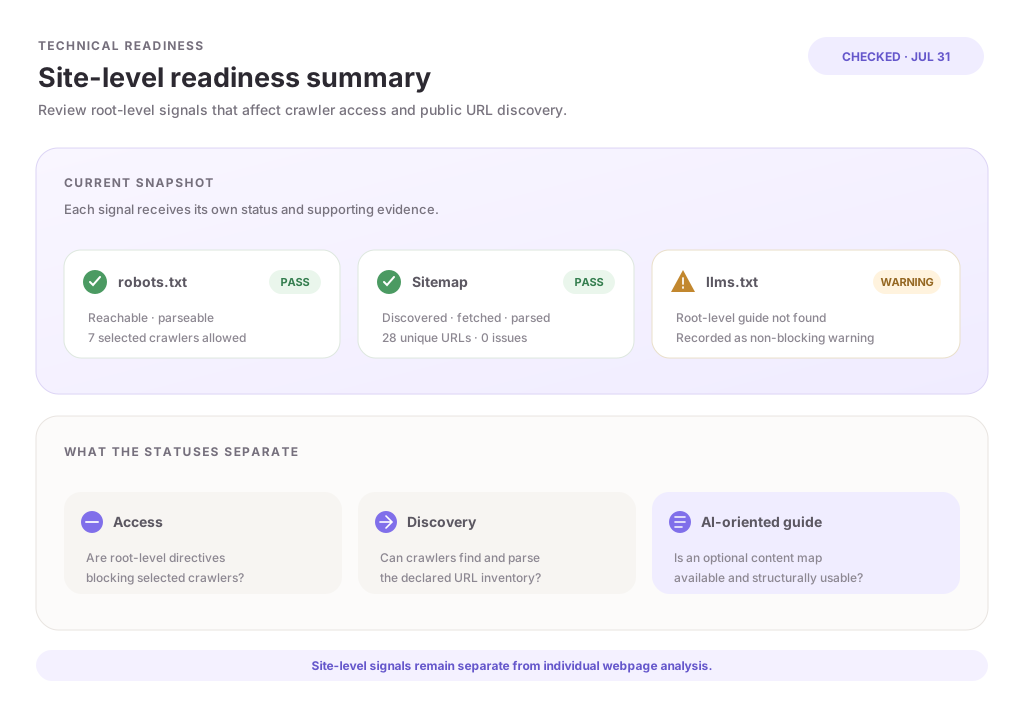
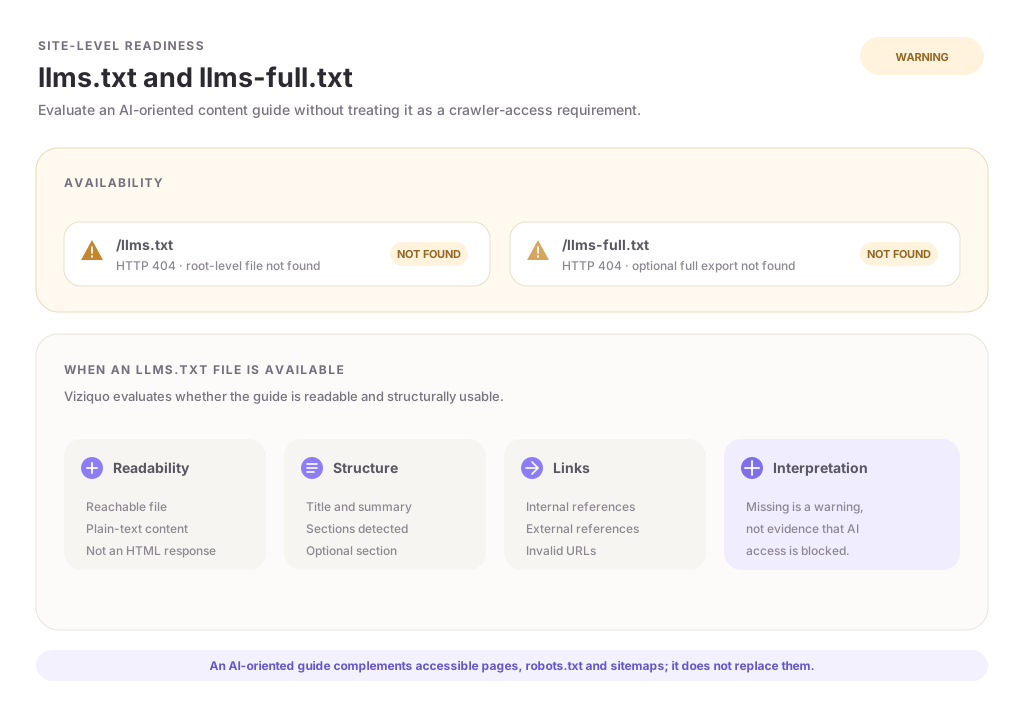
Viziquo records a missing llms.txt file as a warning, not as proof that AI crawlers or retrieval agents are blocked. It is evaluated as an optional AI-oriented guide alongside—not instead of—robots.txt, sitemaps, and accessible webpages.
Does Technical Readiness analyze every webpage?
Individual URLs are evaluated in the separate Page Analysis workspace. Technical Readiness focuses on site-level files and access controls; Page Analysis covers fetchability, page-specific crawler access, indexability, canonicals, content extraction, metadata, and structured data.