Page Analysis

Verify whether individual webpages are technically ready to be discovered

Viziquo analyzes each webpage in the technical inventory for fetchability, bot protection, crawler access, indexability, canonical configuration, extractable content, metadata, and structured data presence.

Instead of stopping at a site-wide check, Page Analysis identifies the exact URLs with errors or warnings and retains the evidence your content, SEO, engineering, and web teams need to review them.

Move from a site-wide status to the affected URL

Healthy robots.txt and sitemap results do not guarantee that every important page can be fetched, indexed, or interpreted at a basic document level. A page can carry its own blocking directive, return an interstitial, use an unexpected canonical, expose little extractable content, or omit useful machine-readable signals.

Page Analysis evaluates those conditions URL by URL. Technical Readiness remains the complementary workspace for root-level robots.txt, crawler access, sitemap, and llms.txt checks.

Explore

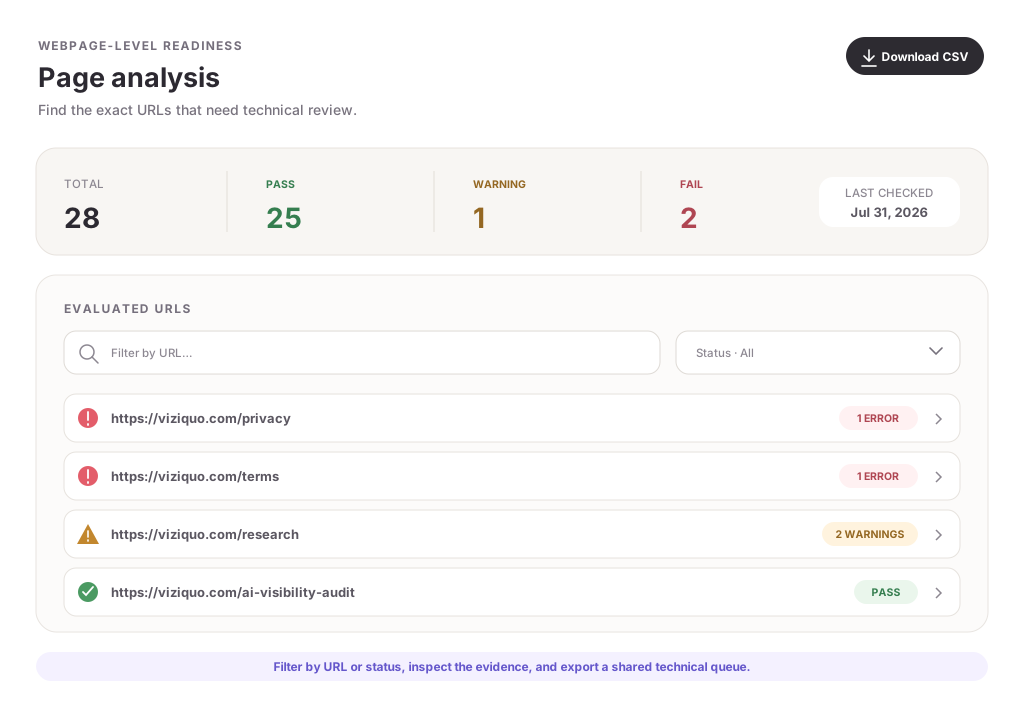
Webpage readiness inventory

What you see

A summary of the total evaluated URLs and their pass, warning, or fail status, followed by a filterable page list. Each row identifies the URL, its current status, and the number of recorded issues. Results can be filtered by URL or status and exported as CSV.

What it tells you

Which pages are technically ready, which need review, and whether findings are isolated or repeated throughout the analyzed inventory. Opening a row connects the page status to the errors and warnings that produced it.

Why it matters

Site-level checks can pass while commercially important pages still have page-specific problems. The inventory gives SEO, content, engineering, and web teams a shared, URL-specific queue instead of leaving technical findings disconnected from the assets they affect.

Viziquo
Viziquo filterable webpage readiness inventory and status summary

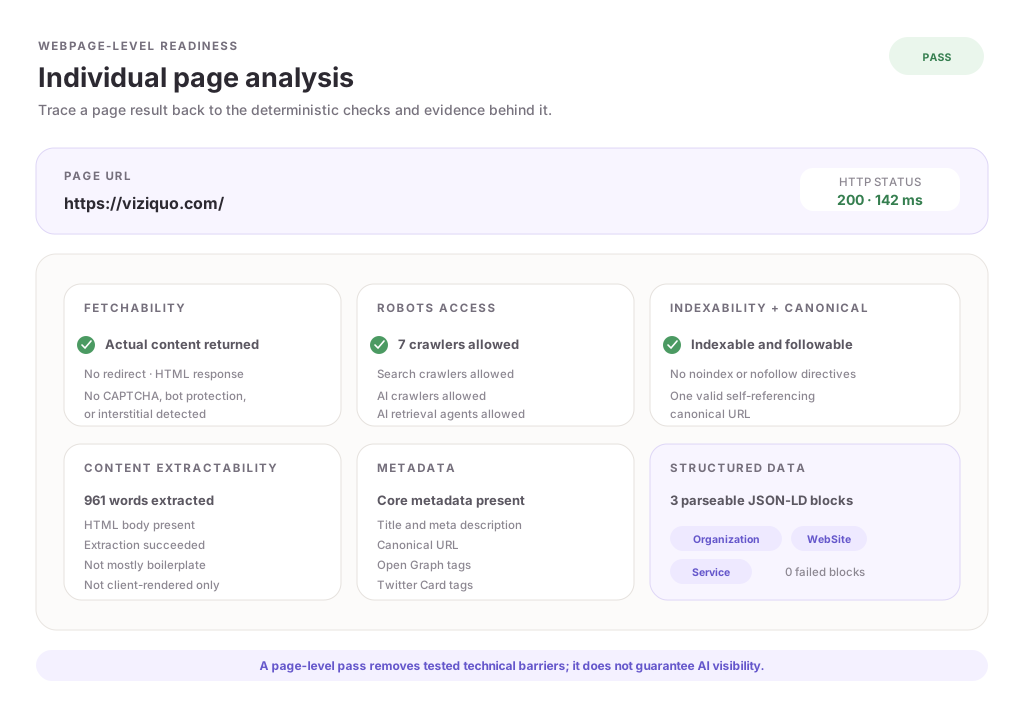
Individual webpage analysis

What you see

A deterministic technical record for each evaluated URL covering:

  • Fetchability: HTTP response, redirects, returned content, response time, and suspected CAPTCHA, bot protection, or interstitials.

  • Crawler access: Page-specific permission for the selected search crawlers, AI crawlers, and retrieval agents.

  • Indexability: Meta robots and X-Robots-Tag directives, including noindex, nofollow, and snippet-related controls.

  • Canonical configuration: Presence, validity, and the canonical URL’s relationship to the evaluated page.

  • Content extractability: Whether meaningful page text could be extracted, word count, text-to-HTML ratio, client-rendering signals, and possible boilerplate dominance.

  • Metadata presence: Title, meta description, Open Graph, Twitter Card, and related metadata.

  • Structured data presence: JSON-LD blocks, parseability, detected schema types, and failed blocks.

Errors and warnings remain attached to the page and the check that produced them.

What it tells you

Whether a particular webpage can be fetched, crawled, indexed, and interpreted at a basic technical document level. It distinguishes hard barriers from conditions that require human judgment—for example, an intentional noindex directive or a legitimately concise page.

Why it matters

AI visibility recommendations often lead to creating or improving specific pages. Page Analysis helps teams verify that those assets are technically available and machine-readable before assuming that content, authority, or distribution alone will solve the visibility problem.

Viziquo
Viziquo individual webpage analysis for access, indexability, metadata and structured data

Interpret page statuses before changing the site

A pass means the evaluated checks did not identify a blocking or warning condition at the time of analysis. It does not guarantee indexing, retrieval, citation, favorable framing, or recommendation by an AI assistant.

A warning or failure is not automatically an instruction to make a change. A legal page may be intentionally marked noindex; a short page may serve its purpose without additional copy; and a canonical may deliberately point elsewhere. The URL, check category, status, and evidence should be reviewed in business context before action is assigned.

Connect page readiness to observed AI visibility

Page Analysis determines whether an important URL presents an identifiable technical barrier. It does not assume that every visibility gap is caused by the website. Viziquo connects the technical layer with:

  • Visibility Analysis for observed discovery, displacement, citations, and source patterns.

  • Brand Framing for tone, positioning, recommendation strength, and narrative.

  • Recommendations for reviewed strategic responses.

  • Tasks for implementation-ready work.

  • Evidence for the conversations, citations, and retrieved search results behind the findings.

  • Technical Readiness for site-wide access and discovery controls.

Together, these views help the team determine whether a page needs a technical change, a content change, stronger evidence, wider authority, or no change at all.

Frequently asked questions

Does Viziquo analyze every webpage on the site?

Viziquo analyzes the URLs included in the technical page inventory created for the readiness run. The Pages workspace states the total evaluated count so teams can see the scope of the result rather than assuming it represents an unlimited crawl.

Does Viziquo detect CAPTCHA or bot protection?

Yes. Fetchability records whether actual content was likely returned and whether suspected bot protection, a CAPTCHA, or an interstitial was detected for the evaluated page.

Are AI crawler rules checked for each page?

Yes. Page Analysis evaluates the selected search, AI, and retrieval user agents against the specific URL. This complements the root-level crawler view in Technical Readiness.

Does Page Analysis check meta tags and structured data?

Yes. It checks core metadata presence, including titles, descriptions, Open Graph and Twitter Card signals. It also detects JSON-LD blocks, whether they can be parsed, and the structured-data types present.

Does a passing page guarantee AI visibility?

No. A pass means the evaluated technical checks did not identify a blocking or warning condition. AI discovery and citation also depend on relevance, evidence, authority, provider behavior, buyer context, and the wider source environment.

Are all failures automatically problems that should be fixed?

No. Some directives and configurations are intentional. The affected URL, issue, and evidence should be reviewed in business context before a change is made.

Can the results be shared with another team?

Yes. The workspace can be filtered by URL and status, and the page inventory can be exported as CSV for SEO, content, engineering, and web teams.

First ChatGPT analysis free

Find out what ChatGPT says about your brand.

Share your website. We’ll test real buyer questions specific to your brand in ChatGPT and deliver a reviewed analysis showing where your brand appears, how it is framed, which competitors and sources shape the answers, and what to do next.

Full Viziquo analyses include ChatGPT, Claude, Gemini, and Perplexity.

Free · No credit card needed · Delivered within 3 business days