What evidence does Viziquo retain?
Viziquo retains the tested buyer conversations and AI answer transcripts, the citations presented in those answers, and the search results retrieved during provider research for the selected analysis.
Viziquo retains the evidence produced during your AI visibility analysis: the buyer questions tested, the answers returned by ChatGPT, Claude, Gemini, Google AI Mode, Google AI Overview, Grok, Microsoft Bing AI Answers (Copilot Search), and Perplexity, the sources cited in those answers, and the search results retrieved while the providers were researching their responses.
This evidence does not replace the reviewed analysis. It makes the analysis inspectable, giving marketing, content, SEO, brand, competitive, and research teams a shared record they can examine before acting on a finding.
The Evidence workspace is tied to a specific analysis date, conversation set, buyer model, and group of AI providers. It separates evidence into three views—Conversations, Citations, and Search Results—so different stages of answer formation are not blended together.
Each view can be searched and filtered by the dimensions relevant to that evidence type. The evidence package can also be downloaded for offline review, documentation, or handoff.
Explore
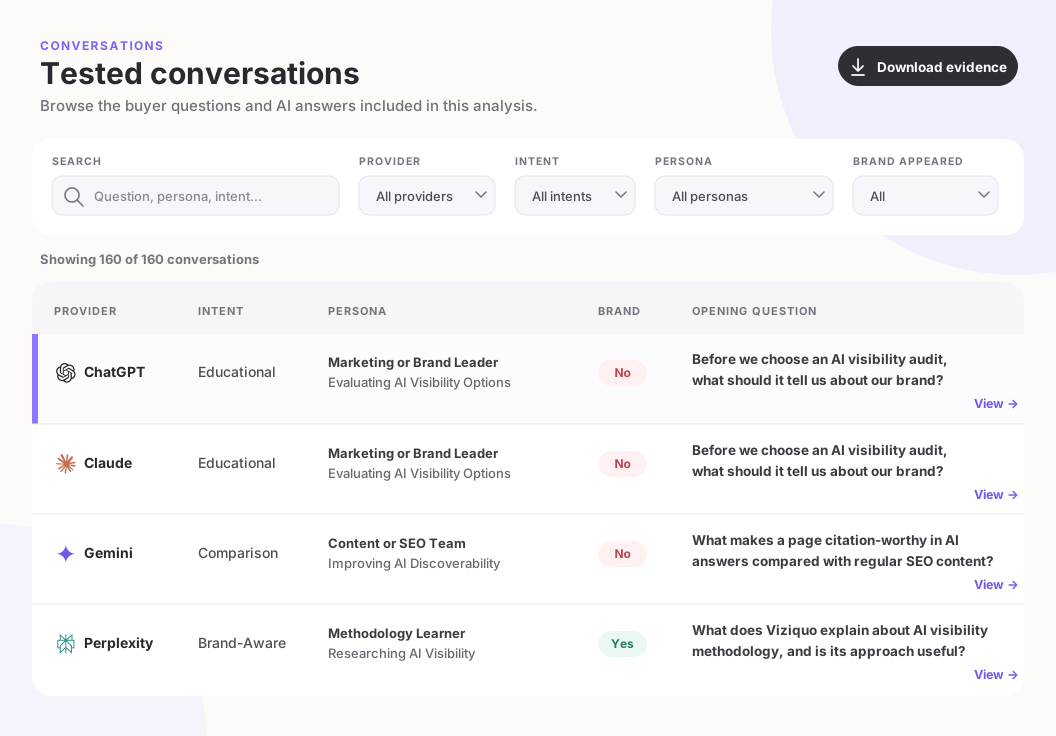
A searchable table of the buyer conversations included in the analysis. Each record identifies the AI provider, buyer intent, buyer persona, whether the brand appeared, and the opening question. Filters let you narrow the evidence by provider, intent, persona, and brand appearance.
Which question was tested, which buyer context it represented, which AI assistant answered it, and whether the brand entered that answer at all.
Aggregate visibility measures become easier to evaluate when teams can inspect the questions and answer records behind them. You can distinguish a broad pattern from an isolated response and investigate the buyer journeys most relevant to a finding.
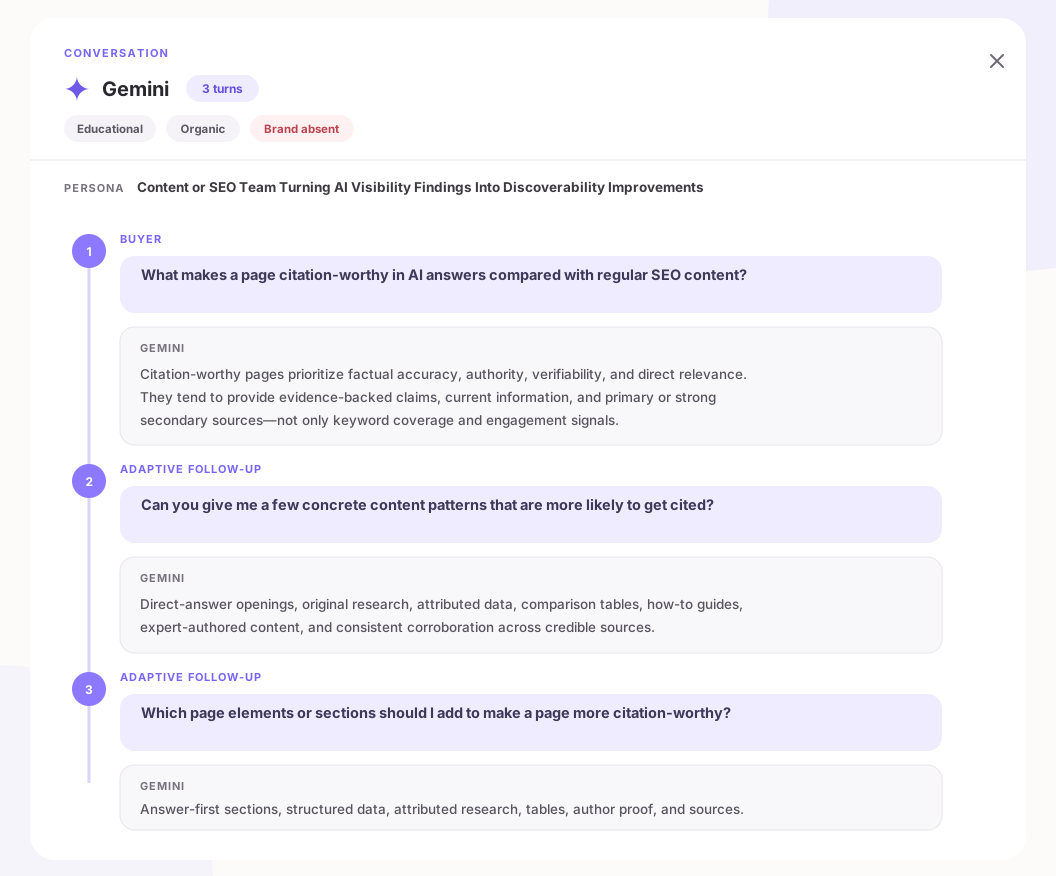
The selected conversation’s provider, opening question, persona, intent, prompt context, response classification, brand-appearance result, and complete user-and-assistant transcript. When the test continued beyond the first response, the transcript preserves each follow-up question and answer in sequence.
Exactly how the buyer’s question was framed, how the AI assistant initially responded, and how the answer developed as the simulated buyer asked relevant follow-up questions. It preserves the language, recommendations, comparisons, qualifications, and explanations that shaped the complete buyer interaction—not merely whether the brand received a mention.
AI-assisted research is often iterative. A brand may appear, disappear, become more strongly recommended, or be displaced as the buyer narrows the question. Multi-turn transcripts reveal that progression, while a mention count or first-answer snapshot cannot.
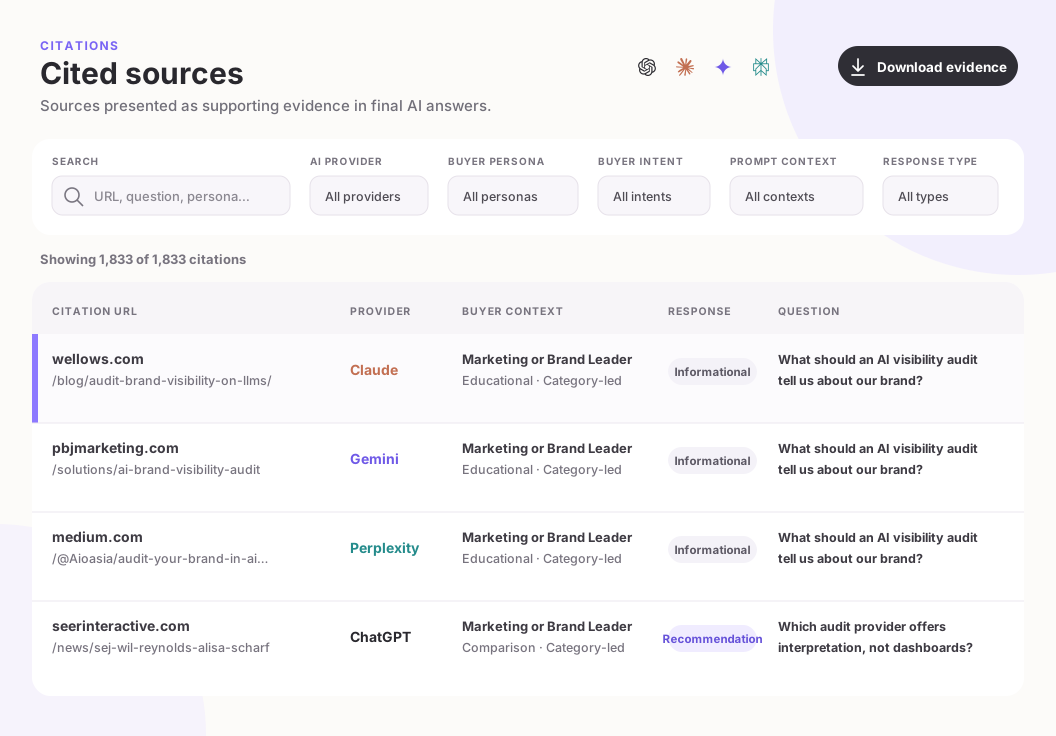
The URLs presented as citations in the tested AI answers, connected to the AI provider, buyer persona, buyer intent, prompt context, response type, and question in which each citation appeared. The records can be searched and filtered across those dimensions.
Which sources AI assistants exposed as supporting evidence in their final responses and the buyer contexts in which those sources were used.
Citation evidence shows whose material is helping support the answer buyers receive. Teams can investigate whether brand-owned, competitor-owned, independent, community, review, documentation, or other sources are contributing authority in important discovery and evaluation journeys.
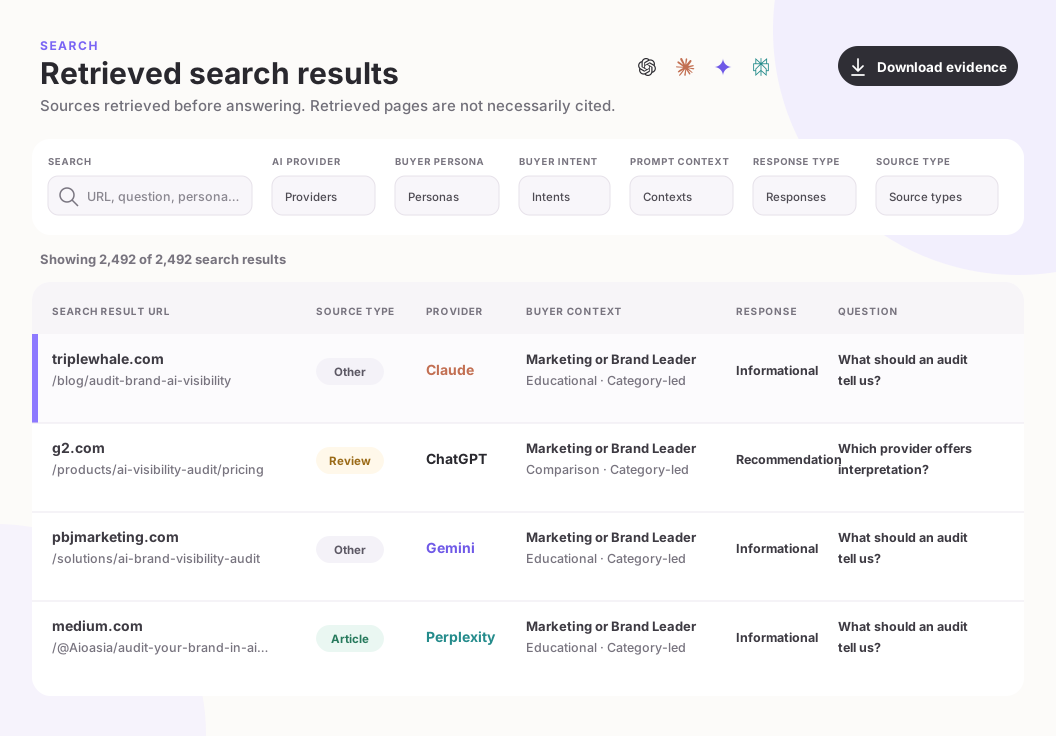
The URLs AI providers retrieved while researching their answers, along with source type, provider, persona, intent, prompt context, response type, and the associated buyer question. Search-result records can be filtered by source type as well as the other evidence dimensions.
Which pages entered the provider’s research process before the final answer was produced. A retrieved result may influence the research path even when it does not appear as a citation in the final response.
Retrieval and citation are different stages. Keeping search results separate helps teams investigate whether relevant pages are being discovered at all and whether discovered pages are subsequently selected as visible evidence.
The three evidence views support different questions:
Conversations show what the buyer asked and what the AI assistant said.
Citations show which sources were presented with the final answer.
Search Results show which sources were retrieved during research, including pages that were not ultimately cited.
Reading these layers together can narrow the next investigation. If a page is not retrieved, the team may need to investigate discoverability or relevance. If it is retrieved but not cited, the next question may concern source selection, usefulness, authority, or fit for that answer. If it is cited, the conversation shows how the source participated in the final response.
These records provide diagnostic context, not automatic proof of cause. A single retrieval, citation, mention, or omission does not independently establish why an AI assistant produced an answer.
Search and filters make it possible to move from a reviewed finding to a bounded set of relevant records—for example, one provider, buyer persona, intent, prompt context, response type, source type, or brand-appearance outcome.
The downloadable evidence package preserves the underlying records outside the dashboard. Teams can use it for internal review, leadership documentation, specialist investigation, or comparison with a later analysis while retaining the context of the original run.
Evidence connects directly to the rest of Viziquo:
Visibility Analysis interprets discovery, competitor, citation, and retrieved-source patterns across the evidence set.
Brand Framing examines the tone, recommendation strength, narrative, caveats, and positioning within brand-present answers.
Recommendations turns reviewed findings into prioritized strategic responses.
Tasks translates selected recommendations into implementation-ready work.
Trends compares summarized results across completed analyses while each run retains its own evidence base.
Brand Details shows the personas and buyer questions that define what the analysis tested.
Viziquo retains the tested buyer conversations and AI answer transcripts, the citations presented in those answers, and the search results retrieved during provider research for the selected analysis.
A citation is a source presented with the final AI answer. A search result is a page retrieved while the AI provider was researching the answer. A retrieved page is not necessarily cited.
Yes. The conversation table identifies whether the brand appeared, and the conversation detail shows the associated question, context, and full transcript.
Yes. Available filters include provider, buyer persona, buyer intent, and other evidence-specific dimensions such as brand appearance, prompt context, response type, and source type.
Yes. The Evidence workspace provides a downloadable evidence package for the selected analysis.
No. These records help teams investigate how an answer was formed, but one citation, retrieval, mention, or omission does not independently prove causation.
Share your website. We’ll test real buyer questions specific to your brand in ChatGPT and deliver a reviewed analysis showing where your brand appears, how it is framed, which competitors and sources shape the answers, and what to do next.
Full Viziquo analyses include ChatGPT, Claude, Gemini, Google AI Mode, Google AI Overview, Grok, Microsoft Bing AI Answers (Copilot Search), and Perplexity.
Free · No credit card needed · Delivered within 3 business days