
Brand Details

Ground your AI visibility analysis in your brand and its buyers

Viziquo builds a structured brand profile from your website and defines the buyer personas most relevant to your market. Together, they establish the category, positioning, audience, competitive context, buyer goals, and decision criteria needed to interpret AI visibility in context.

The Brand Details workspace keeps that foundation visible so your team can understand the market model behind the analysis—not just the results produced from it.

Make the analysis specific to your market

The same AI answer can mean different things for different brands. A competitor mention may be strategically important in one category and incidental in another. Visibility with a technical implementer may matter differently from visibility with a decision-maker evaluating vendors.

Brand Details captures the brand and buyer context needed to make those distinctions. It focuses on two connected layers: what the brand is and how it competes, and who its relevant buyers are and what they need to accomplish.

Explore

Brand profile

What you see

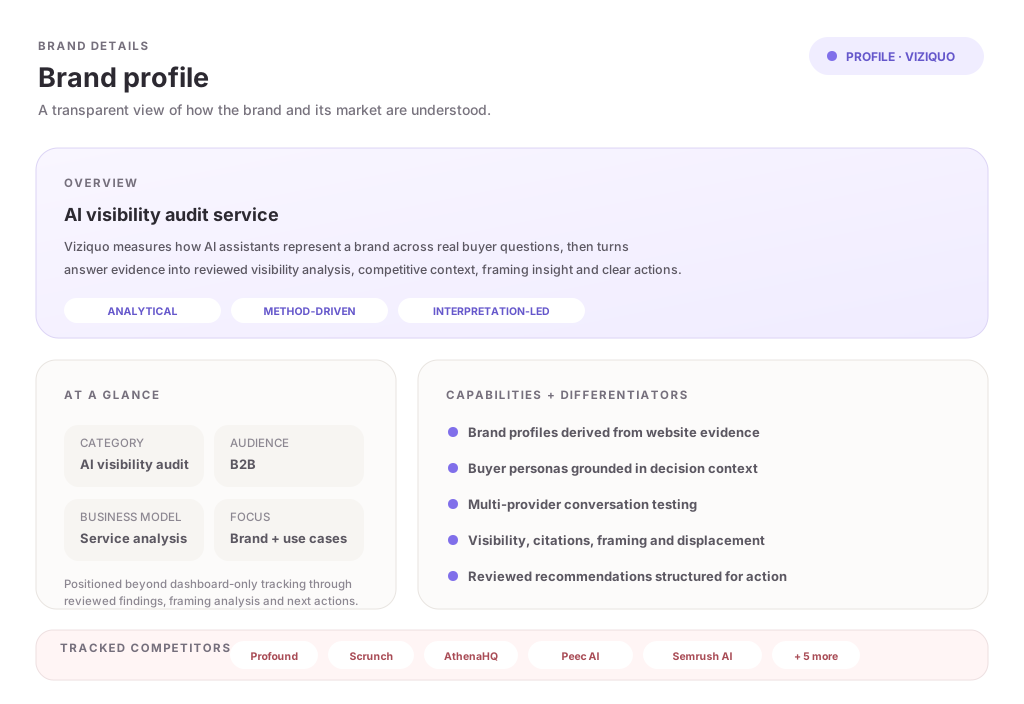
A structured description of the brand assembled from its supplied website pages, including:

  • an overview of what the brand offers

  • the problem it addresses and its core solution

  • market context, positioning, and tone

  • category, brand type, business model, audience, and visibility focus

  • key capabilities and differentiators

  • the competitors included in the market model

What it tells you

How Viziquo understands the brand before interpreting visibility results: the category it belongs to, the claims it makes, the buyers it serves, the language it uses, the capabilities it emphasizes, and the alternatives against which it should be evaluated.

Why it matters

Visibility cannot be interpreted reliably without a defined category and competitive context. The profile makes the analysis brand-specific and gives your team a transparent way to review the assumptions that shape persona selection, competitor analysis, framing interpretation, and recommendations.

Viziquo
Viziquo structured brand profile with positioning, capabilities and tracked competitors

User personas

What you see

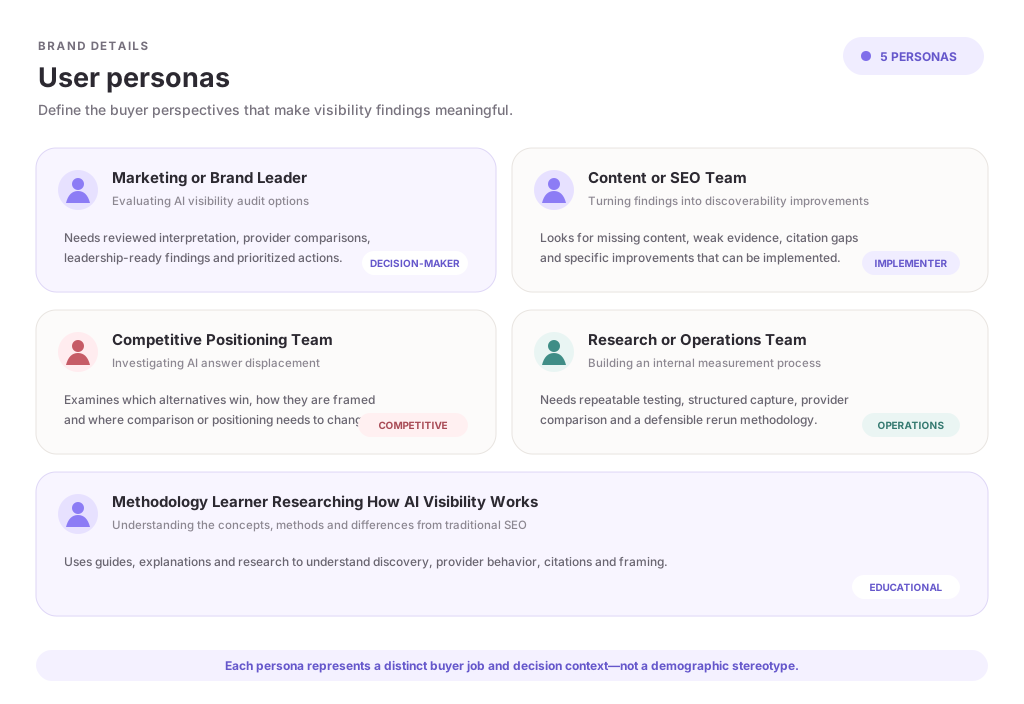
The buyer personas selected for the brand’s market model, each with a name and concise description of the role, responsibility, or decision situation it represents.

What it tells you

Which distinct buyer perspectives the analysis is designed to examine. The persona set separates decision-makers, implementers, competitive stakeholders, operational researchers, and educational audiences when those groups have meaningfully different needs.

Why it matters

An overall visibility rate can hide major audience differences. Defining personas allows results to be interpreted by the buyers who research, compare, validate, implement, or choose—not only as a blended brand average.

Viziquo
Viziquo buyer persona list for the brand’s market model

Persona details

What you see

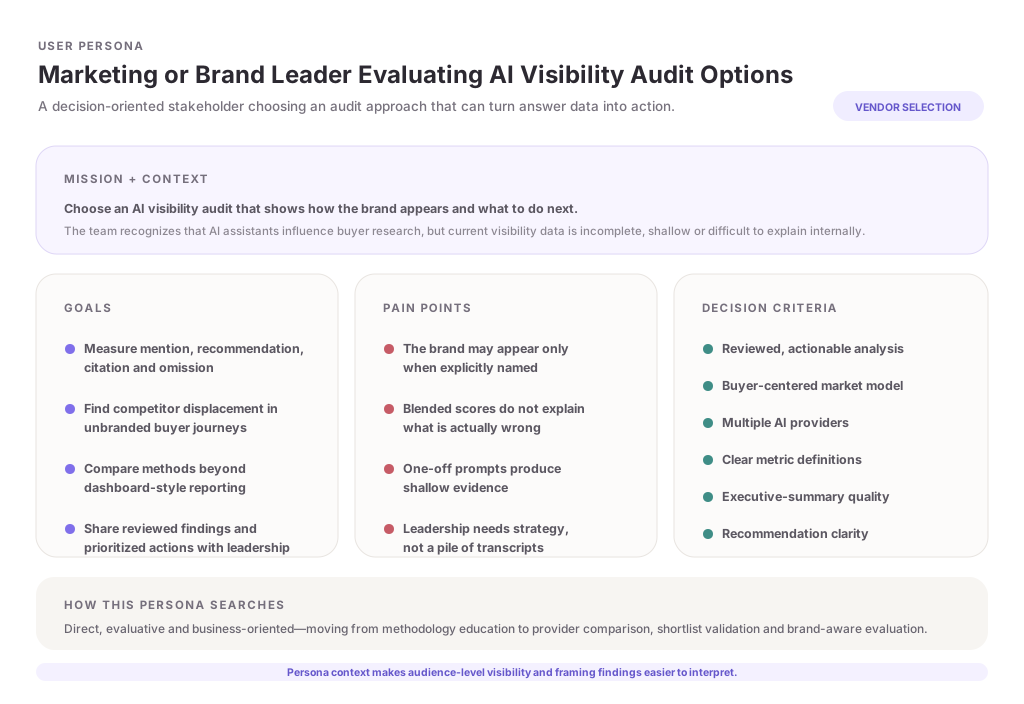
A detailed view of an individual persona, including its overview, mission and context, primary search objective, goals, pain points, decision criteria, and characteristic search behavior.

What it tells you

What that buyer is trying to accomplish, why they enter the market, what creates uncertainty, what standards influence their decision, and how their information needs differ from other audiences.

Why it matters

A persona label alone does not explain why a brand should appear in one buyer journey and not another. The detail view makes the audience model inspectable and helps marketing, content, research, product, and competitive teams understand the buyer logic behind persona-level findings.

Viziquo
Viziquo detailed buyer persona with mission, goals, pain points and decision criteria

Use the market model throughout the analysis

Brand Details is not a disconnected profile document. Its market context carries into the rest of Viziquo:

  • Executive Dashboard summarizes the brand’s current position and highest-priority findings.

  • Visibility Analysis separates discovery and displacement patterns by buyer persona and intent.

  • Brand Framing shows how tone, narrative, strengths, caveats, and recommendation strength vary by audience.

  • Recommendations connects reviewed findings to the brand’s positioning, proof, content, and competitive needs.

  • Evidence retains the conversations and sources associated with each persona and buyer context.

  • Trends tracks how persona-level visibility changes across comparable analyses.

This shared foundation helps teams interpret every result against the same definition of the brand, its market, and its buyers.

Frequently asked questions

How does Viziquo build the brand profile?

Viziquo uses the supplied public website pages to identify the brand’s offering, problem and solution, category, audience, positioning, capabilities, differentiators, and competitive context. The resulting profile remains visible in Brand Details for review.

What is included in a user persona?

Each persona includes a summary, mission and context, goals, pain points, decision criteria, primary search objective, and characteristic search behavior. The structure emphasizes the buyer’s job and decision situation rather than relying only on demographic traits.

Why are personas part of an AI visibility analysis?

Different buyers ask for different kinds of help and encounter different competitive answers. Personas allow Viziquo to distinguish visibility with a brand leader choosing a provider from visibility with an implementer diagnosing a content problem or a researcher learning the methodology.

Does Brand Details show the complete test-question set?

No. The Brand Details experience presented here focuses on the brand profile and user personas. The complete set of test questions is not shown by default.

Can the persona model affect how results are interpreted?

Yes. Persona-level visibility, displacement, framing, and citation patterns are interpreted against the needs and decision context defined for that audience. This is why the persona model remains inspectable rather than being hidden behind an overall score.

Are tracked competitors limited to the brands already known to our team?

The brand profile records the competitive set used to establish market context. The visibility analysis can separately reveal which competitors actually appear when the tested brand is absent, including patterns that may differ from the expected competitive landscape.

First ChatGPT analysis free

Find out what ChatGPT says about your brand.

Share your website. We’ll test real buyer questions specific to your brand in ChatGPT and deliver a reviewed analysis showing where your brand appears, how it is framed, which competitors and sources shape the answers, and what to do next.

Full Viziquo analyses include ChatGPT, Claude, Gemini, and Perplexity.

Free · No credit card needed · Delivered within 3 business days