How many analyses are needed before Trends becomes useful?
Trends requires more than one completed analysis. Its value increases as a comparable history develops and teams can distinguish repeated patterns from one-run variation.
Viziquo Trends compares completed AI visibility analyses over time. It shows whether discovery, brand presence, competitor displacement, buyer-audience visibility, and citation influence are strengthening, weakening, or remaining volatile across comparable runs.
Instead of treating the latest result as a standalone score, teams can evaluate it against the brand’s own history and investigate which part of the buyer journey contributed to the change.
The Trends workspace states how many analyses are being compared, the date range they cover, and the conversation and provider context for the latest run. Navigation moves directly to Snapshot, Discovery, Personas, Competitors, and Citations without separating those dimensions from the same analysis history.
Each series includes its current, maximum, minimum, and average result. That context helps teams distinguish a sustained change from ordinary variation across repeated AI testing.
Explore
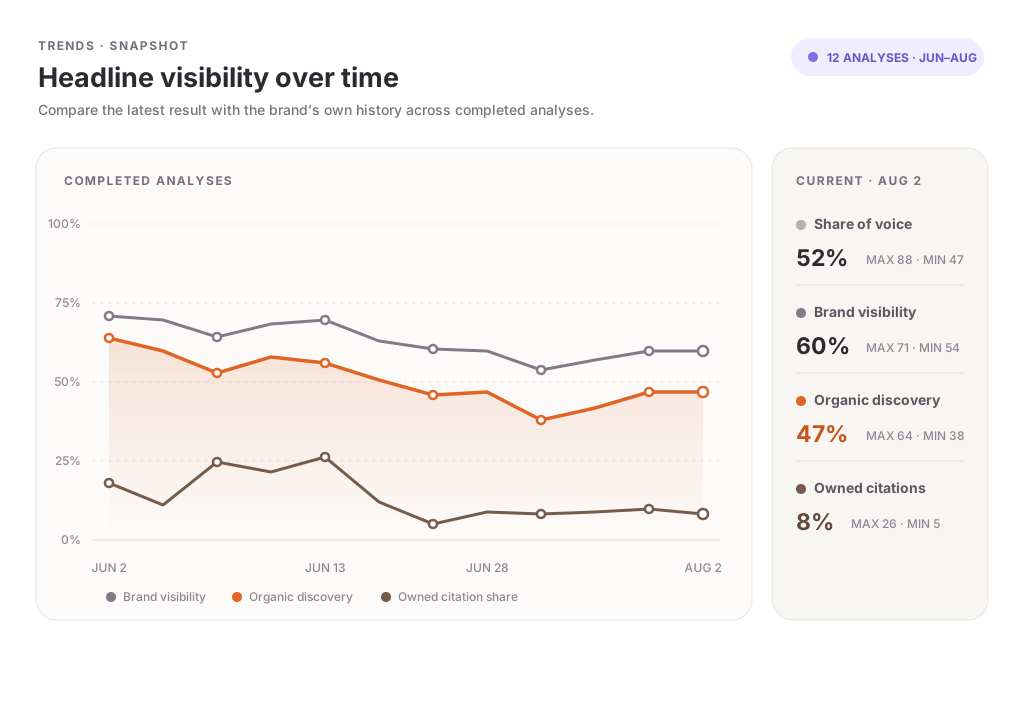
Brand visibility, organic discovery, brand share of voice, and owned-citation share plotted across completed analyses, with current, maximum, minimum, and average values for each measure.
Whether the brand’s overall presence and source influence are moving in the same direction or diverging. For example, appearance may remain comparatively stable while organic discovery or owned citations weaken.
A blended score can conceal the mechanism behind a change. Reviewing the measures together helps leaders separate broad visibility from unprompted discovery and citation authority before deciding what deserves investigation.

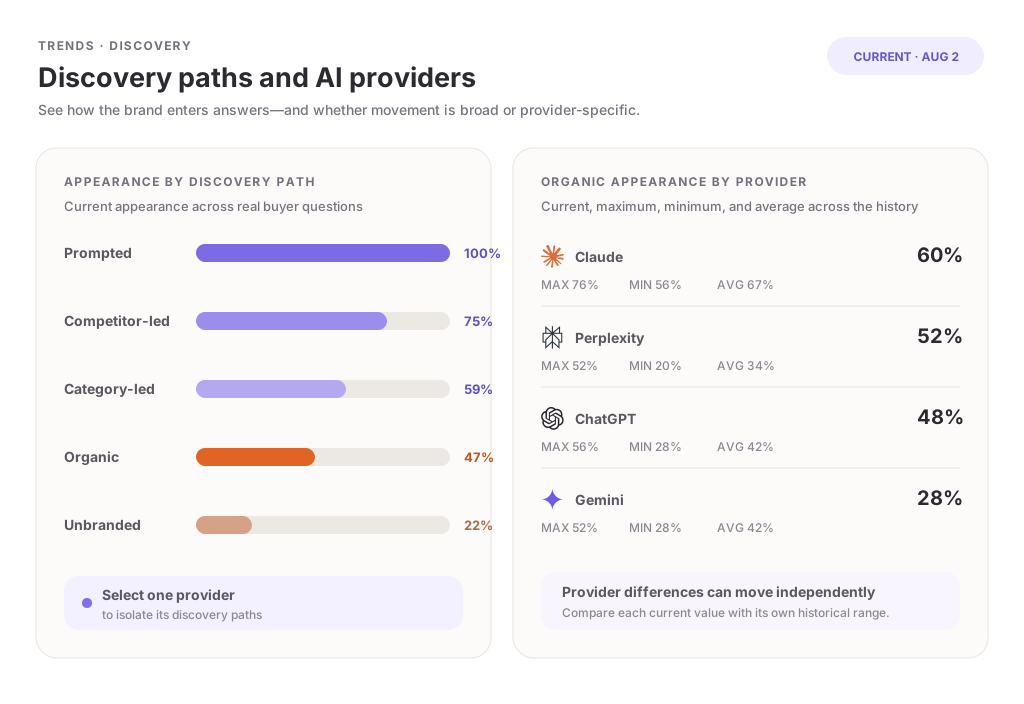
Brand appearance over time for prompted, competitor-led, category-led organic, organic, and unbranded discovery paths, plus organic appearance for ChatGPT, Claude, Gemini, Google AI Mode, Google AI Overview, Grok, Microsoft Bing AI Answers (Copilot Search), and Perplexity. Discovery paths can also be examined for an individual provider.
Whether buyers must already know the brand, whether competitor questions introduce it, whether category and unbranded questions discover it, and whether a change is broad or concentrated within one AI assistant.
Improvements in direct-name recognition do not necessarily improve organic discovery. Provider and discovery-path trends help teams identify whether the underlying issue is recognition, category authority, competitive association, unbranded relevance, or a platform-specific pattern.
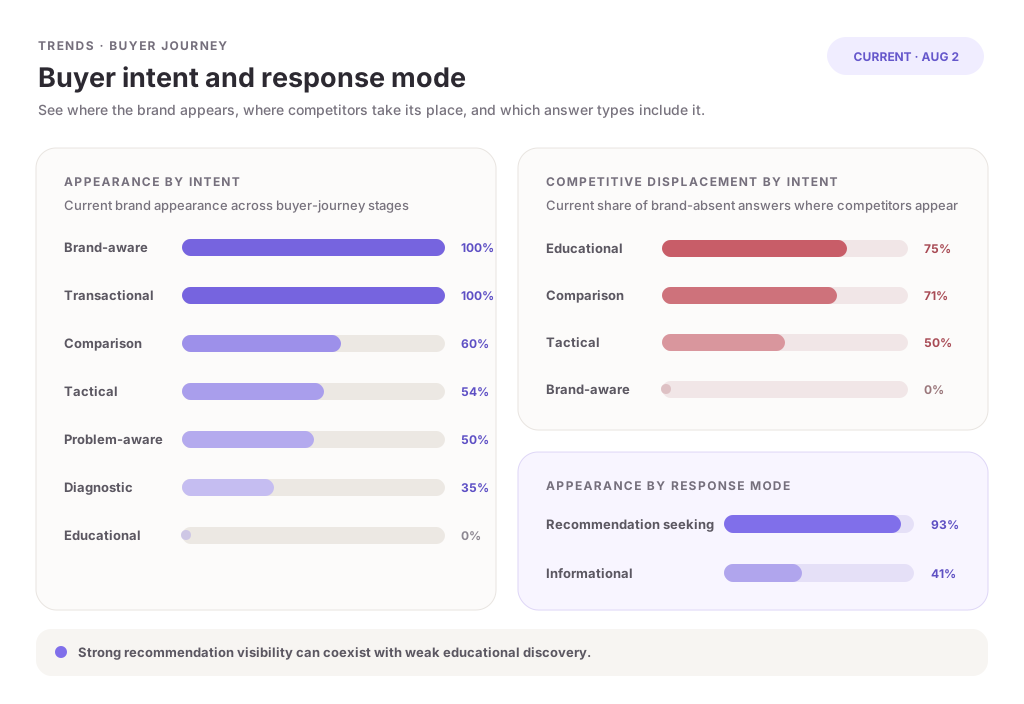
Brand appearance and competitive displacement across buyer intents, alongside appearance in informational and recommendation-seeking answers.
Where the brand enters or disappears from the buyer journey, whether competitors occupy the missing answer space, and whether the brand is more likely to appear when an assistant is explaining a topic or recommending an option.
Strong visibility in direct-name or vendor-selection questions can coexist with weak educational, diagnostic, tactical, or comparison visibility. Intent and response-mode trends show whether change is reaching the stages and answer types that matter to the team’s strategy.
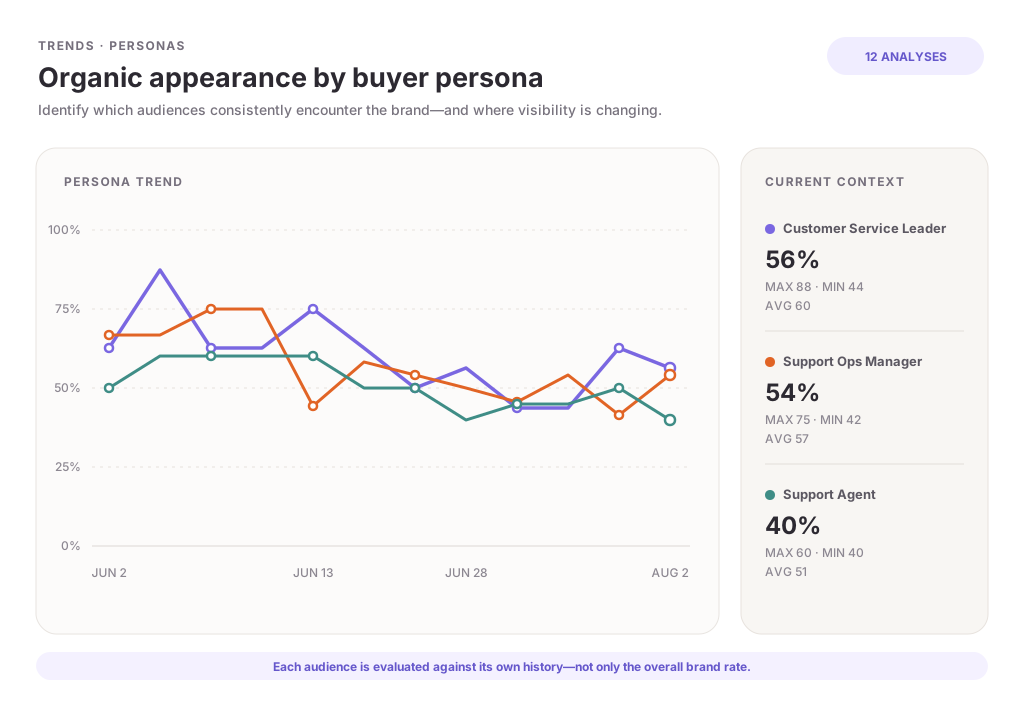
Organic appearance over time for each buyer persona in the brand’s market model, with the current, maximum, minimum, and average result for every audience.
Which buyer audiences consistently encounter the brand, which are improving or declining, and whether an overall movement is being driven by one audience rather than the market as a whole.
A brand can be visible to one buyer group and nearly absent for another. Persona trends help marketing, content, product, and competitive teams evaluate the audience journeys they are responsible for instead of relying only on an overall rate.
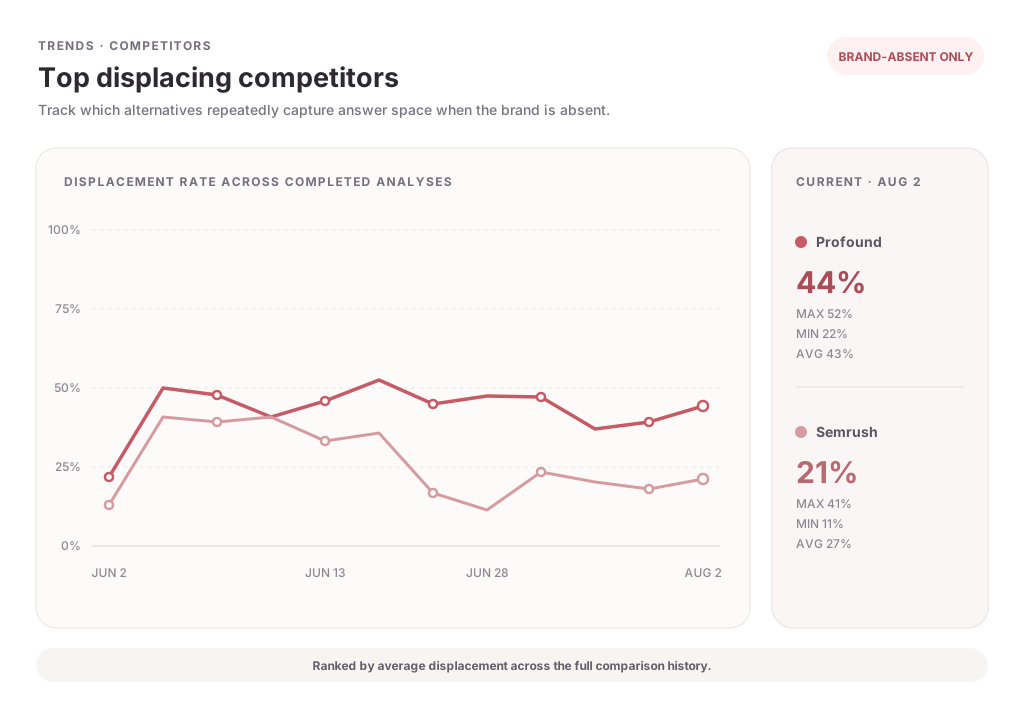
The competitors most frequently appearing in brand-absent conversations, ranked by their average displacement rate and tracked across completed analyses.
Which alternatives repeatedly capture missed answer space, whether their presence is sustained or episodic, and whether competitive pressure is becoming more concentrated or fragmented.
The competitor that dominates traditional search or sales conversations may not be the one AI assistants introduce most often. Trends reveal the alternatives buyers are actually encountering when the brand is absent.
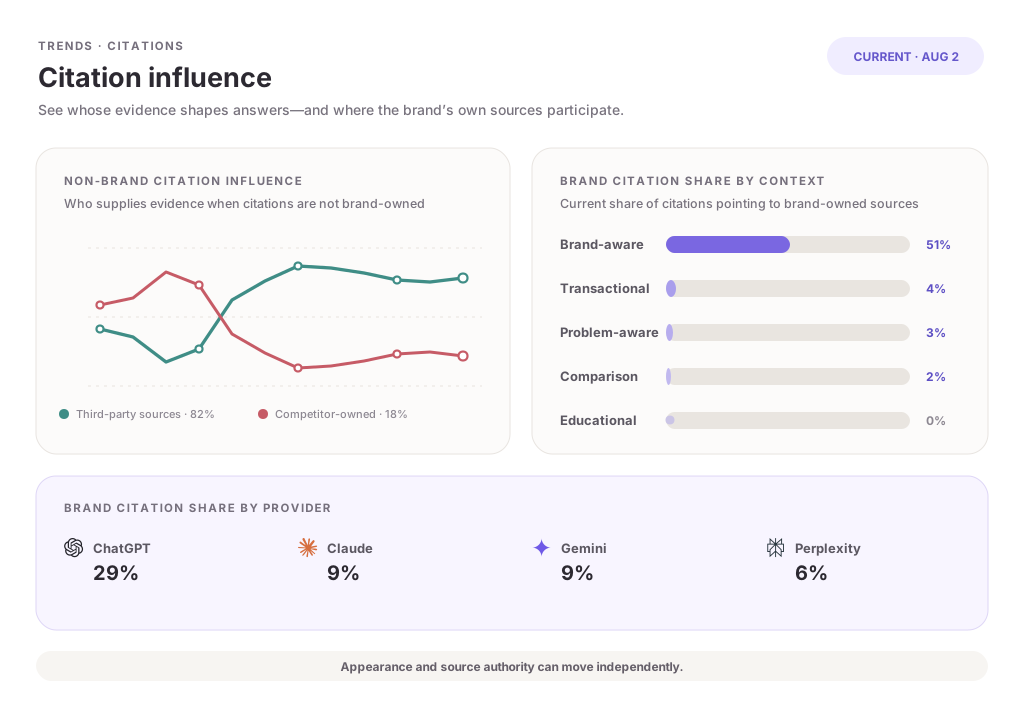
The changing share of non-brand citations going to competitor-owned and third-party sources, brand-owned citation share by buyer context, and brand-owned citation share within each AI provider’s answers.
Whether the brand’s own evidence is becoming more influential, who supplies evidence when it does not, and which buyer contexts or AI assistants are most and least likely to cite brand-owned material.
Appearance and source authority can move independently. Citation trends help teams distinguish a brand that is mentioned from one whose own evidence participates in the answer, while showing where independent or competitor sources continue to shape the narrative.
Every Trends view states how many analyses are being compared and the date range they cover. Comparability depends on two things underneath that count and date range: whether the question library stayed the same, and whether each conversation was recorded consistently.
A change to the question library — a question added, removed, or reworded between runs — changes what a shift in the numbers means. A drop in category-led appearance reads differently if the category-led questions themselves changed than if they didn’t. Each analysis carries a version of the question set behind it, the same way it carries its date.
Comparability also depends on what’s recorded for each conversation: the question asked, which provider answered it, whether the brand appeared, what was cited, which competitors showed up, and the final visibility outcome. That’s the record a shift in a Trends chart can be traced back into.
Two runs can still be plotted next to each other without this consistency — the chart doesn’t require it. The comparison it implies isn’t necessarily a real one.
Trends show how observed results changed across completed analyses. They do not independently prove that a particular webpage, campaign, technical change, or recommendation caused the movement.
Changes can also reflect provider behavior, source availability, question coverage, market activity, or normal variation in AI answers. Viziquo keeps the analysis history and underlying evidence available so teams can investigate a pattern before attributing it to a single cause.
Trends connects directly to the rest of Viziquo:
Executive Dashboard summarizes the latest leadership-level position and priorities.
Visibility Analysis explains the discovery, competitor, citation, and source patterns within an individual run.
Brand Framing examines how tone, narrative, recommendation strength, and positioning change within brand-present answers.
Recommendations identifies the most defensible strategic responses supported by the reviewed analysis.
Tasks translates selected recommendations into implementation-ready work.
Evidence retains the conversations, citations, and retrieved search results for each completed analysis.
Trends requires more than one completed analysis. Its value increases as a comparable history develops and teams can distinguish repeated patterns from one-run variation.
Yes. Viziquo tracks organic appearance and brand-owned citation share separately for ChatGPT, Claude, Gemini, Google AI Mode, Google AI Overview, Grok, Microsoft Bing AI Answers (Copilot Search), and Perplexity when those providers are present in the compared analyses.
Trends shows organic appearance by buyer persona and appearance and displacement by buyer intent. These views can identify where a change is concentrated, although they do not independently prove its cause.
Yes. It tracks the competitors appearing in brand-absent conversations and ranks them by average displacement rate across the available history.
Not by themselves. Trends establishes that the observed results changed. The reviewed analysis, implementation history, and run-level evidence are needed to investigate why.
Material changes to questions, personas, provider coverage, or analysis design can affect comparability. Trend interpretation should account for the market model and evidence base used in each run.
Share your website. We’ll test real buyer questions specific to your brand in ChatGPT and deliver a reviewed analysis showing where your brand appears, how it is framed, which competitors and sources shape the answers, and what to do next.
Full Viziquo analyses include ChatGPT, Claude, Gemini, Google AI Mode, Google AI Overview, Grok, Microsoft Bing AI Answers (Copilot Search), and Perplexity.
Free · No credit card needed · Delivered within 3 business days